
Imagine walking a few steps from your kitchen and picking fresh coriander, mint, green chillies and curry leaves whenever you cook. That small daily pleasure is exactly what a kitchen garden gives you, and you do not need a farm or a big house to have one. These kitchen garden ideas for beginners are designed for Indian balconies, terraces and even sunny windowsills. With a few pots, good soil and ten minutes of care a day, anyone can grow fresh, chemical-free herbs and vegetables at home, save money, and enjoy the deep satisfaction of eating something you grew yourself.
Pick the Right Spot for Your Garden
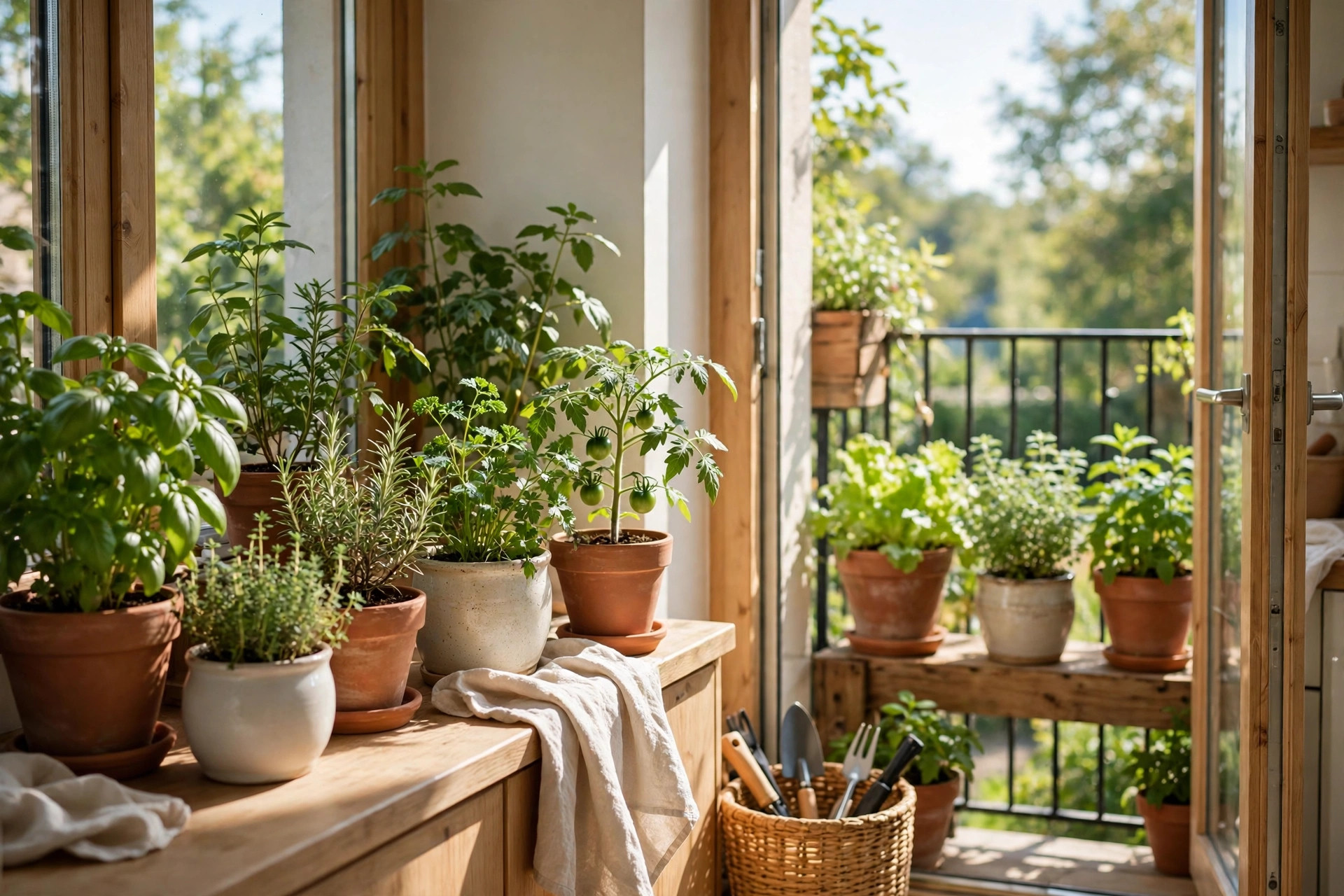
Most kitchen plants need at least four to five hours of direct sunlight. Watch your balcony or terrace for a day and note where the sun falls longest. South and west-facing spaces usually work well in India. If your space gets less sun, do not give up: mint, coriander, spinach and curry leaves manage with partial light, and you can grow them in movable pots that follow the sun through the seasons.
Start Small and Grow Slowly
The most common beginner mistake is planting twenty things at once and then feeling overwhelmed. Start with five or six easy plants, learn their watering and light needs, and add more every month. A small, thriving garden is far more motivating than a large, struggling one. This gentle approach is the same philosophy behind low maintenance garden ideas that keep gardening enjoyable instead of tiring.
The Easiest Plants to Grow First
- Mint (pudina): grows fast in a wide pot; keep it separate because it spreads aggressively.
- Coriander (dhania): sow seeds every two weeks for a continuous supply of leaves.
- Green chillies: one or two plants give a surprisingly generous harvest for months.
- Curry leaves: slow at first, then a generous small shrub that lasts for years.
- Tulsi: hardy, sacred in Indian homes, and happy in a sunny corner.
- Spinach and fenugreek (palak and methi): quick leafy greens ready in about a month.
Move to Vegetables When You Feel Ready
Once herbs succeed, try tomatoes, brinjals, okra and bottle gourd in larger pots or grow bags of at least 12 inches. Vegetables need more sun, water and feeding than herbs, but the reward of your first home-grown tomato is unforgettable. Balcony growers can copy many space-saving tricks from these small balcony garden ideas, such as railing planters and vertical stands.
Soil, Pots and Drainage Basics
Good soil matters more than expensive pots. Mix garden soil, compost and cocopeat in roughly equal parts for a light, rich mix that drains well. Every pot must have drainage holes; without them, roots rot quickly, especially in the monsoon. Place a tray or old plate under pots to protect floors, and raise pots slightly on stands or bricks so water can escape freely.
Feed Your Plants With Kitchen Waste
Plants in pots exhaust their soil quickly, so feed them every two to three weeks. A handful of compost, diluted buttermilk, or water left from washing rice and dal keeps them happy. A small home compost bin made from an old bucket turns vegetable peels into free fertiliser and reduces household waste at the same time.
Watering Without Wasting Water
Water early in the morning so plants can use the moisture through the day and leaves dry before night. In peak Indian summer, pots may need water daily; in winter, alternate days are usually enough. The finger test never fails: if the top inch of soil feels dry, water; if moist, wait. Mulching pots with dry leaves or coco husk slows evaporation and keeps roots cool.
Simple Solutions for Common Problems
Yellow leaves usually mean overwatering or poor drainage, while white powdery spots and tiny insects are common in humid weather. A spray of neem oil mixed with water handles most pests safely without chemicals. Remove badly affected leaves, keep air moving between pots, and avoid wetting leaves late in the evening. Gardeners with terrace space can combine all these habits with smart layouts from these terrace garden ideas for an even bigger harvest.
Grow With the Indian Seasons
India’s seasons decide what your kitchen garden will love growing. In winter, across most of the country, spinach, fenugreek, coriander, carrots and radish thrive in the cool weather and gentle sun. Summer is the season for okra, bottle gourd, ridge gourd, chillies and basil, which enjoy the heat as long as they get enough water. During the monsoon, focus on drainage, prop up pots so they never sit in standing water, and grow leafy greens under a slight shelter so heavy rain does not batter the leaves or wash away seeds.
Keep a Simple Garden Routine
Successful beginners follow a tiny routine rather than heroic weekend efforts. Spend five minutes every morning watering and looking closely at your plants; catching insects or yellowing leaves early is far easier than rescuing a sick plant later. Once a week, loosen the top soil gently, remove dead leaves, and check that drainage holes are clear. Once a month, top up pots with a handful of compost. This small rhythm keeps a kitchen garden healthy in any Indian home, and it quickly becomes the most peaceful few minutes of the day.
Harvest Little and Often
Herbs and leafy greens taste best when picked young and often. Snip the outer leaves of spinach and fenugreek rather than pulling the whole plant, pinch mint and tulsi tips to encourage bushy growth, and never harvest more than one-third of a plant at a time. Regular picking actually tells the plant to grow more, so your small garden keeps on giving.
Conclusion
A kitchen garden is not a project with an end date; it is a small, happy habit that grows with you. Start with a sunny corner, six easy plants, good soil and regular watering, and these kitchen garden ideas for beginners will do the rest. Within weeks you will be seasoning dal with your own curry leaves and making chutney from your own mint, and there is no going back from that freshness.