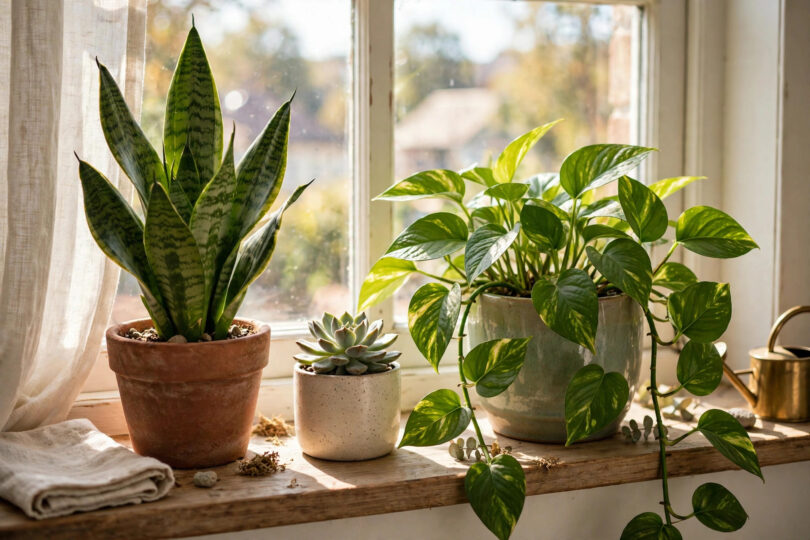

Not everyone has a green thumb, and in busy Indian homes with long work hours, frequent travel and varying light, many plants simply do not survive. That is why low maintenance indoor plants are the smartest way to bring greenery indoors. Low maintenance indoor plants forgive missed watering, tolerate low light, and still clean the air and brighten a room. Whether you live in a small flat with one sunny window or a large house with shaded corners, there is a hardy plant that will thrive with almost no effort — and once you learn the few rules that keep them alive, you will wonder why you ever thought indoor gardening was difficult.
Why Hardy Plants Suit Indian Homes
Indian homes present a unique mix of challenges for plants: intense summer heat, dry air from fans and air conditioning, monsoon humidity, and dust that settles on leaves. Hardy plants evolved to cope with neglect, storing water in thick leaves or roots and growing slowly even in poor light. That makes them ideal for beginners, frequent travellers and anyone who has killed a plant before. They also suit the Indian habit of keeping plants in decorative pots on balconies, windowsills and living-room corners, moving them indoors during extreme heat. Start with two or three plants, learn their rhythms, and add more only when the first ones are thriving.
The Best Low Maintenance Indoor Plants
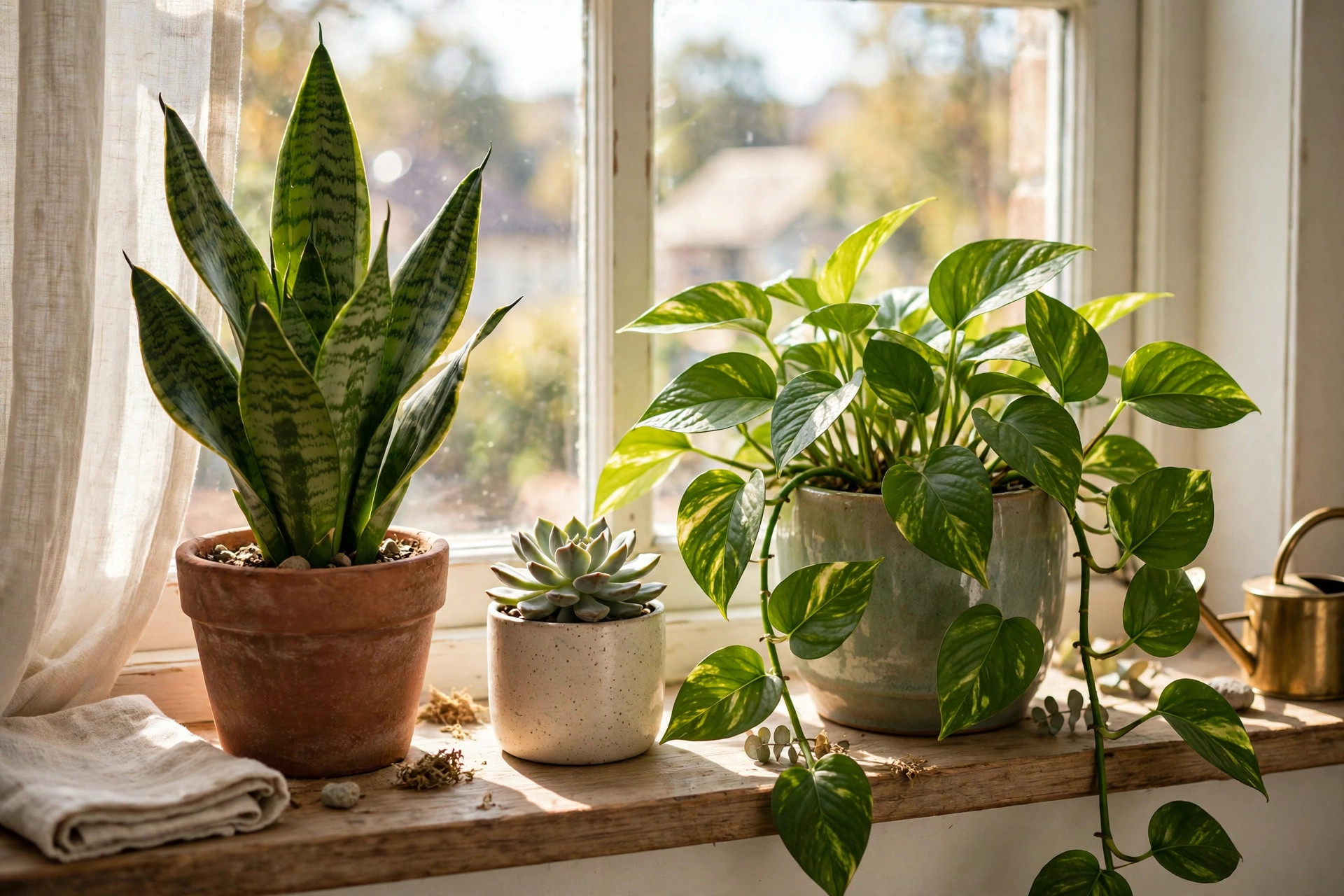
Snake plant, also called sansevieria, tops almost every easy-care list: it tolerates low light, needs water only every two to three weeks, and releases oxygen at night, making it a good bedroom plant. Money plant (pothos) grows in water or soil, trails beautifully from shelves, and survives in a dim corner with occasional watering. ZZ plant stores water in its rhizomes and can go a month without water, while spider plant produces baby plantlets you can gift to friends. Aloe vera needs bright light and very little water, and doubles as a remedy for minor burns. Peace lily flowers in low light but likes slightly moist soil, so it suits owners who water weekly. Choose plants for your actual light conditions, not for how they look in a shop: a snake plant in a dark bathroom will outlive a fussy fern in the same spot every time.
Watering: Less Is Almost Always More
Overwatering kills more indoor plants than underwatering, especially in Indian homes where well-meaning family members water daily. Most low maintenance indoor plants prefer their soil to dry out between waterings. Push a finger an inch into the soil: if it feels dry, water thoroughly until it drains from the bottom; if it feels damp, wait. Always use pots with drainage holes, and empty saucers so roots never sit in standing water, which causes rot. In winter, water even less, since growth slows. A simple routine — checking plants every Sunday rather than watering daily — keeps most hardy plants happy and gives you a weekly moment to notice new growth, pests or dusty leaves.
Light, Placement and Pots
Light matters more than fertiliser for indoor plants. Bright indirect light — near a window with a sheer curtain — suits most hardy varieties, while direct afternoon sun through west-facing windows can scorch leaves in summer. Rotate pots every couple of weeks so plants grow evenly instead of leaning towards the window. Terracotta pots breathe and help soil dry out, which suits plants that hate wet feet, while ceramic and plastic pots hold moisture longer. Match pot size to the plant: a pot only slightly larger than the root ball prevents soggy soil, and repotting every one or two years refreshes nutrients. Grouping plants together raises local humidity, which helps during dry months, and looks far better than a single lonely pot in a corner.
Simple Care Routines That Work
Beyond watering and light, a few small habits keep indoor plants healthy. Wipe large leaves with a damp cloth every few weeks so dust does not block light, and remove yellow or dead leaves promptly so the plant spends energy on new growth. Feed sparingly — a diluted liquid fertiliser once a month in the growing season is plenty, and most hardy plants survive fine without any. Watch for common pests like mealybugs and spider mites, especially in dry indoor air; a wipe with neem oil solution usually solves the problem before it spreads. Keep plants away from direct blasts of air-conditioning and from heaters, and bring balcony plants indoors during extreme heat waves or heavy storms.
Plants for Every Room
Different rooms suit different plants. Bedrooms benefit from snake plant and peace lily, which tolerate low light and improve air quality. Bathrooms with a window suit pothos and ferns that enjoy humidity. Kitchens do well with herbs like mint and curry leaf in bright spots, though herbs need more attention than truly hardy plants. Living rooms can host larger statement plants like a rubber plant or fiddle-leaf fig near a bright window. Balconies and terraces are ideal for hardy outdoor-indoor plants that can move inside during harsh weather. For outdoor planting ideas that pair well with indoor greenery, see these low maintenance garden ideas for Indian homes and terrace garden ideas for Indian homes, which show how to extend your green space beyond the front door.
Start Small and Grow Your Confidence
The best way to begin is with one snake plant and one money plant, placed where you will see them daily. Notice how often their soil dries out in your home, how they respond to your light, and how little attention they actually need. Within a month, new leaves will prove that you can keep plants alive, and that confidence is what turns a hesitant beginner into a proud plant parent. Avoid buying ten plants at once, resist the urge to water on a fixed daily schedule, and remember that slow growth is normal — hardy plants grow steadily, not spectacularly. With low maintenance indoor plants, a greener, calmer, healthier home is genuinely within reach for anyone, no matter how busy life gets.
For more gardening and home guides, visit the Casabloomy homepage.